Lawn Bowls vs. Other Bowling Sports: What’s the Difference?
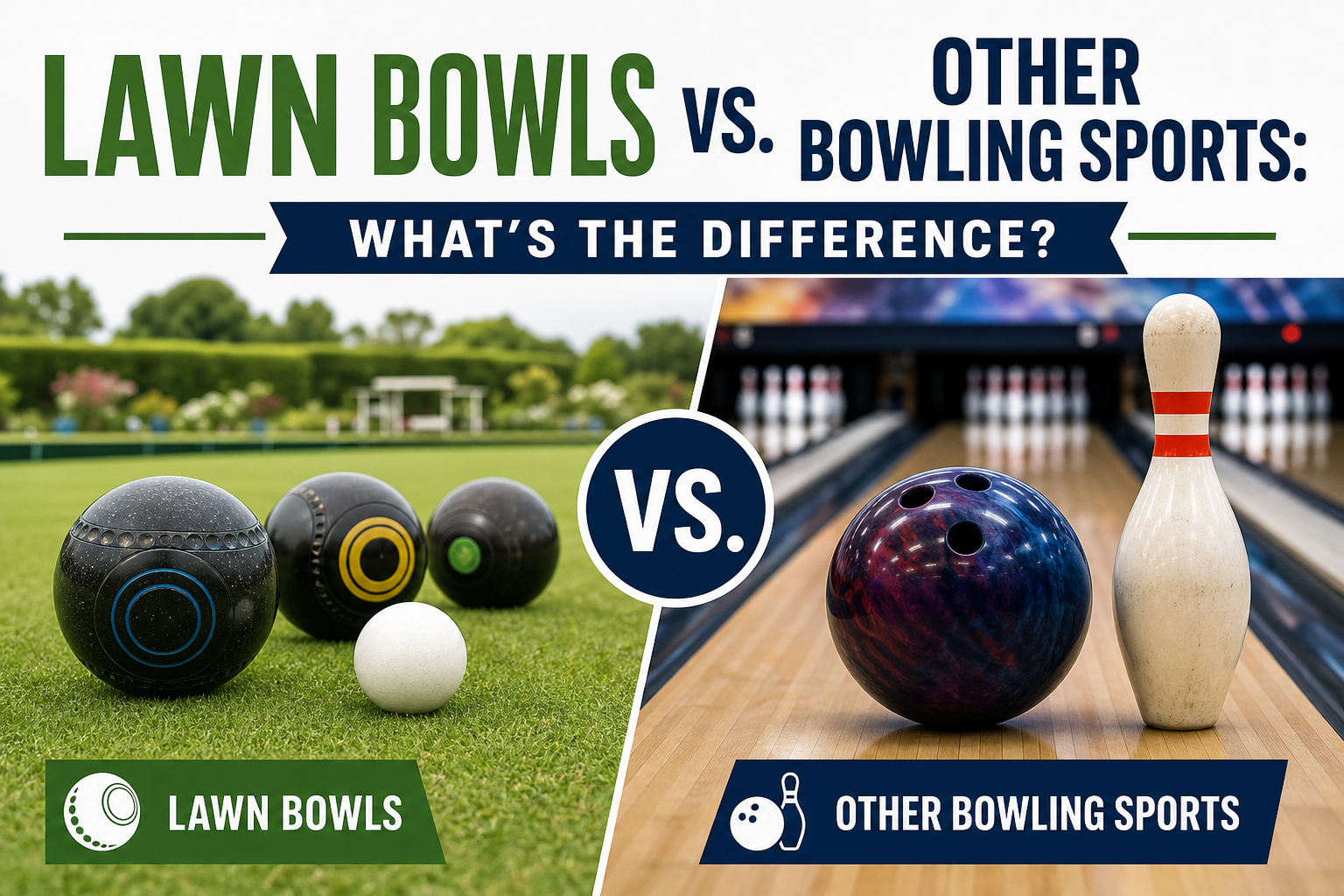
Lawn bowls is a precision sport that stands out distinctly from other forms of bowling. This article explores the key differences between lawn bowls and other popular bowling sports such as ten-pin bowling, candlepin bowling, and pétanque.
1. Playing Surface and Equipment
-
- Lawn Bowls: Played on a grass or artificial surface, known as the bowling green. The balls, called “bowls,” are asymmetrical, allowing them to curve (or “bowl”) as they roll.
-
- Ten-Pin Bowling: Played on a polished wooden or synthetic lane with ten standing pins at the end. Bowlers use heavy, symmetrical balls designed to knock down the pins.
-
- Candlepin Bowling: Similar to ten-pin, but the pins are taller and thinner, and the ball is much smaller and lighter. Bowlers have three rolls per turn to knock down as many pins as possible.
-
- Pétanque: Played outdoors on a variety of surfaces, typically gravel or dirt. Players throw metal balls (boules) as close as possible to a smaller target ball (cochonnet).
2. Objective and Strategy
-
- Lawn Bowls: The objective is to place your bowls closest to the “jack” (the target ball) using strategy and skillful delivery. Players aim to outmaneuver opponents and can employ tactics such as blocking or removing opponents’ bowls.
-
- Ten-Pin/Candlepin Bowling: The goal is straightforward: knock down as many pins as possible. While strategies can vary in terms of aiming and ball release, the primary focus remains on sheer power and accuracy.
-
- Pétanque: Players can choose to land their boule as close to the cochonnet as possible or knock away opponents’ balls. Strategy plays a significant role, as players must take into account the terrain and position of other balls.
3. Gameplay and Scoring
-
- Lawn Bowls: Matches consist of multiple ends, and points are scored based on how many bowls are closer to the jack than any opponent’s bowl.
-
- Ten-Pin Bowling: Scoring is cumulative, with a maximum of 300 points available. Each game consists of ten frames where players roll two balls, scoring based on the number of pins knocked down.
-
- Candlepin Bowling: Similar to ten-pin, but with three rolls per frame and a focus on knocking down as many pins as possible.
-
- Pétanque: Scoring is done by rounds, where the team with the closest boule to the cochonnet scores points.
4. Culture and Popularity
-
- Lawn Bowls: Considered a leisurely sport often associated with social clubs, it has a dedicated following in countries like the UK, Australia, and New Zealand.
-
- Ten-Pin Bowling: A popular recreational activity worldwide, with numerous leagues and tournaments promoting competitive and casual play.
-
- Candlepin Bowling: Predominantly found in New England, it has a niche yet passionate community.
-
- Pétanque: Rooted in French culture, pétanque has gained popularity globally, particularly in places where outdoor activities are valued.
Conclusion
While all bowling sports share the core theme of aiming and accuracy, lawn bowls distinguishes itself through its unique equipment, surface, and strategic depth. By understanding these differences, enthusiasts can appreciate not only their preferred sport but also the diverse world of bowling.